
 EN
EN
 ar
ar bg
bg hr
hr cs
cs da
da nl
nl fi
fi fr
fr de
de el
el hi
hi it
it ko
ko no
no pl
pl pt
pt ro
ro ru
ru es
es sv
sv tl
tl iw
iw id
id lv
lv lt
lt sr
sr sk
sk sl
sl uk
uk vi
vi et
et hu
hu th
th tr
tr fa
fa ms
ms hy
hy ka
ka ur
ur bn
bn mn
mn ta
ta kk
kk uz
uz ku
ku
4G DTU
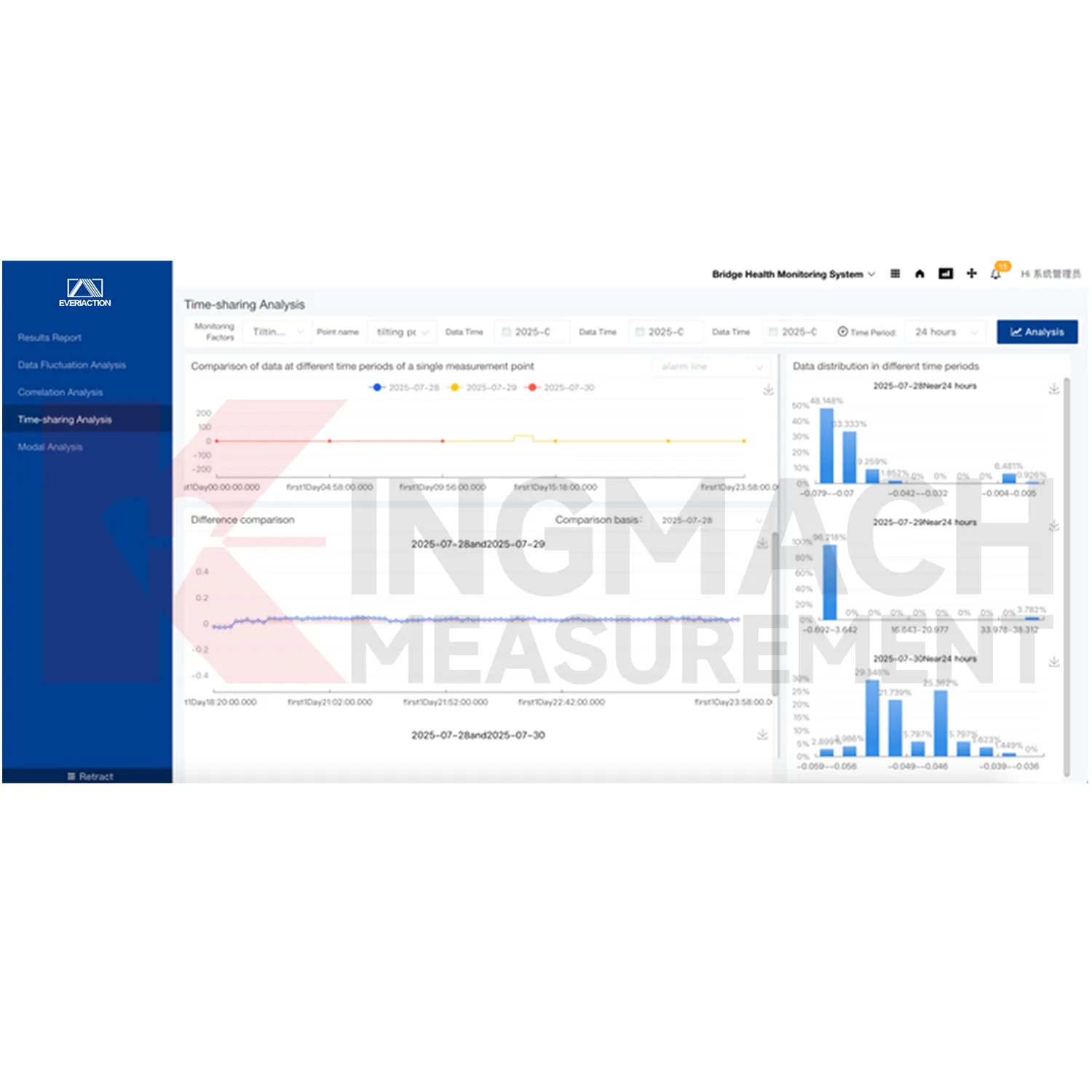
The Monitoring system software platform can build structural safety models and support intelligent detection and health analysis. The local product file describes the use of formulas, algorithms, and manual research and judgment methods to determine the location and extent of structural damage. This makes the platform useful when monitoring data must support engineering interpretation instead of simple storage. The software can warn of changes in structural performance and help reviewers connect abnormal readings with a specific asset area, sensor group, or inspection record.
Application of 4G DTU
Multi-site asset management uses Kingmach 4G DTU when an owner needs consistent monitoring records across several projects. Each project can keep its own basic information, dynamic information, alarm levels, documents, and maintenance records while still following a common digital workflow. This is useful for infrastructure owners, engineering firms, and maintenance teams that manage bridges, tunnels, slopes, buildings, and hydraulic structures at the same time. Standardized visualization and reporting make cross-project review more efficient.
The future of 4G DTU
IoT development will make Kingmach 4G DTU more important because field devices will keep expanding in number and variety. A bridge, tunnel, dam, or slope may use wired channels, wireless nodes, edge loggers, weather stations, and third-party devices at the same time. The platform's compatibility with different manufacturers, types, and models supports this mixed-device future. As monitoring networks grow denser, device access, channel naming, alarm rules, and project organization will matter as much as the individual sensor.
Care & Maintenance of 4G DTU
Data quality checks should be routine in Kingmach 4G DTU. Look for missing values, frozen channels, impossible jumps, timestamp errors, unit mismatch, repeated noise, or disagreement between related sensors. A platform can display data quickly, but engineering trust depends on the quality of the incoming records. When a problem appears, check the field device, cable, communication path, acquisition module, and recent configuration changes before treating the reading as structural behavior.
Kingmach 4G DTU
For project managers, Kingmach 4G DTU gives each monitored asset a defined operating file instead of a loose collection of screens. The team can maintain project basics, live status, inspection notes, maintenance activity, alarm levels, and documents under the same project name. This is useful when an owner needs to explain who checked the data, what changed on site, which alarm was acknowledged, and which report followed. The platform turns daily monitoring into a traceable management routine, so later audits can follow the project history without rebuilding it from scattered folders.
FAQ
Q: Who should receive accounts?
A: Give access only to the owner, operator, engineer, inspector, or reviewer roles that need the platform.
Q: What does an operator need?
A: An operator needs status, active alarms, communication condition, and recent abnormal records.
Q: What does an engineer need?
A: An engineer needs trend comparison, related channels, event notes, and inspection records.
Q: What supports later expansion?
A: Stable project names, point names, device IDs, and channel maps make new device access easier.
Q: What belongs in handover?
A: Provide accounts, permissions, device list, channel map, alarm rules, report setup, backup method, and recent data notes.
Reviews
Ryan Lewis
Fast delivery and excellent product quality. The accelerometers and tiltmeters are highly reliable. Strongly recommend this company.
Joshua Clark
We ordered a full monitoring solution including sensors and data loggers. Everything works seamlessly together. Great supplier!
Latest Inquiries
To protect the privacy of our buyers, only public service email domains like Gmail, Yahoo, and MSN will be displayed. Additionally, only a limited portion of the inquiry content will be shown.
Isabella***@gmail.comGermany
Hello, we are evaluating weir flow meters for a water management project. Please share accuracy deta...
Evelyn***@gmail.comSouth Africa
Hi, we are a contractor working on tunnel construction and need settlement sensors and displacement ...