
 EN
EN
 ar
ar bg
bg hr
hr cs
cs da
da nl
nl fi
fi fr
fr de
de el
el hi
hi it
it ko
ko no
no pl
pl pt
pt ro
ro ru
ru es
es sv
sv tl
tl iw
iw id
id lv
lv lt
lt sr
sr sk
sk sl
sl uk
uk vi
vi et
et hu
hu th
th tr
tr fa
fa ms
ms hy
hy ka
ka ur
ur bn
bn mn
mn ta
ta kk
kk uz
uz ku
ku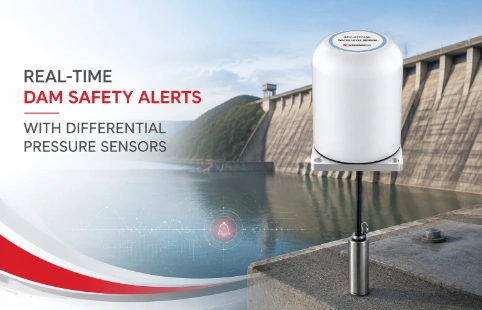
Real-Time Dam Safety Alerts with Differential Pressure Water Level Sensors
Key Takeaways An alert chain needs more than a sensor: define field in...

4-20mA soil moisture sensor: stable signal, seamless integration into industrial systems
In large farms or slope monitoring sites, signal attenuation after long-distance wiring has always been a headache. Voltage signals are prone to interference, and digital buses may require additional converters. The 4-20mA current loop is naturally anti-interference and can run for thousands of meters. It also supports two-wire power supply, making it worry-free to use. Kingmach brings this old industry standard to soil moisture measurement, allowing the sensor to talk directly to PLC or RTU without having to deal with signal matching. For automated systems that already use 4-20mA acquisition, this is almost a plug-and-play solution. Let’s talk about how to choose and use this type of sensor in practice.
Technical Detail
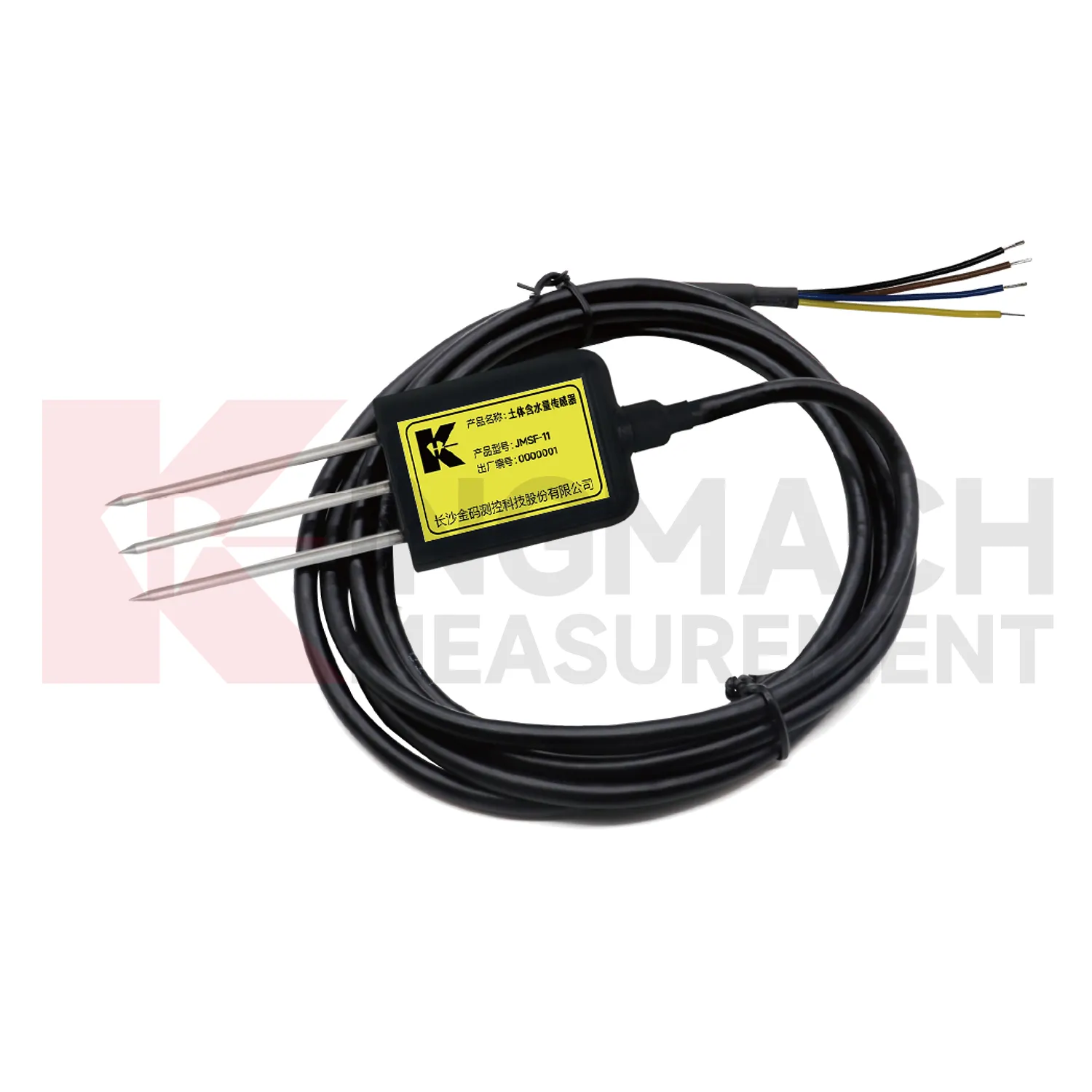
Soil moisture sensors with 4-20mA output are mainly designed for industrial control and remote monitoring scenarios. The current signal is not affected by the line voltage drop and still maintains its original accuracy after being transmitted hundreds of meters, which is difficult to achieve with voltage-type and digital signals. As a mid-range manufacturer of geotechnical and agricultural monitoring instruments, Kingmach integrates this output method into soil moisture probes, allowing users to directly connect to common PLC analog modules such as Siemens and AB, or remote telemetry terminals. From the technical parameters, this type of sensor is usually based on the frequency domain reflectance (FDR) principle, with a measurement range covering 0~100% volume moisture content, and a typical accuracy within ±3% (after proprietary soil calibration). The probe is sealed with epoxy resin or stainless steel, with a protection level of IP68, and can be buried in soil or slopes for a long time. The power supply range is wide, usually 10~30VDC, which can adapt to on-site power fluctuations. Kingmach can also provide customized probe lengths or special cable connectors based on project needs to facilitate quick installation during large-scale deployment. In actual use, the 4-20mA signal corresponds linearly to the soil moisture content. For example, 4mA corresponds to 0% (dry soil), and 20mA corresponds to 100% (saturated). After connecting to the PLC, you can see the real-time moisture content on the HMI or link the irrigation solenoid valve with simple calibration. For upgrading old systems that already have current input modules, this transformation is very straightforward, eliminating the cost of communication protocol development and additional gateways. Kingmach has mature application cases in projects in many countries around the world, and the technical team can assist in initial calibration and system debugging.
News
Key Takeaways An alert chain needs more than a sensor: define field in...
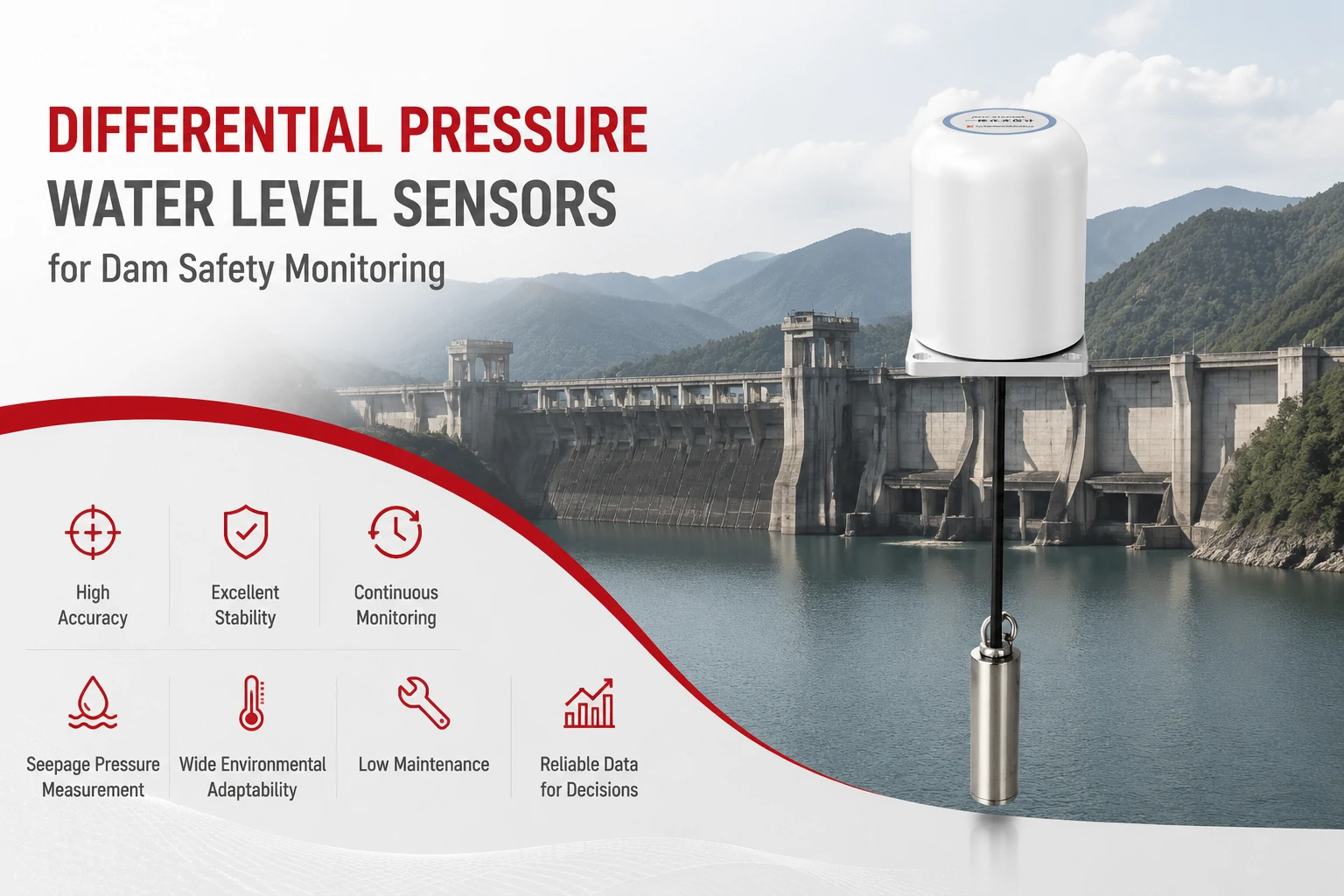
Key Takeaways The strongest fit is usually a confined, submerged, or s...
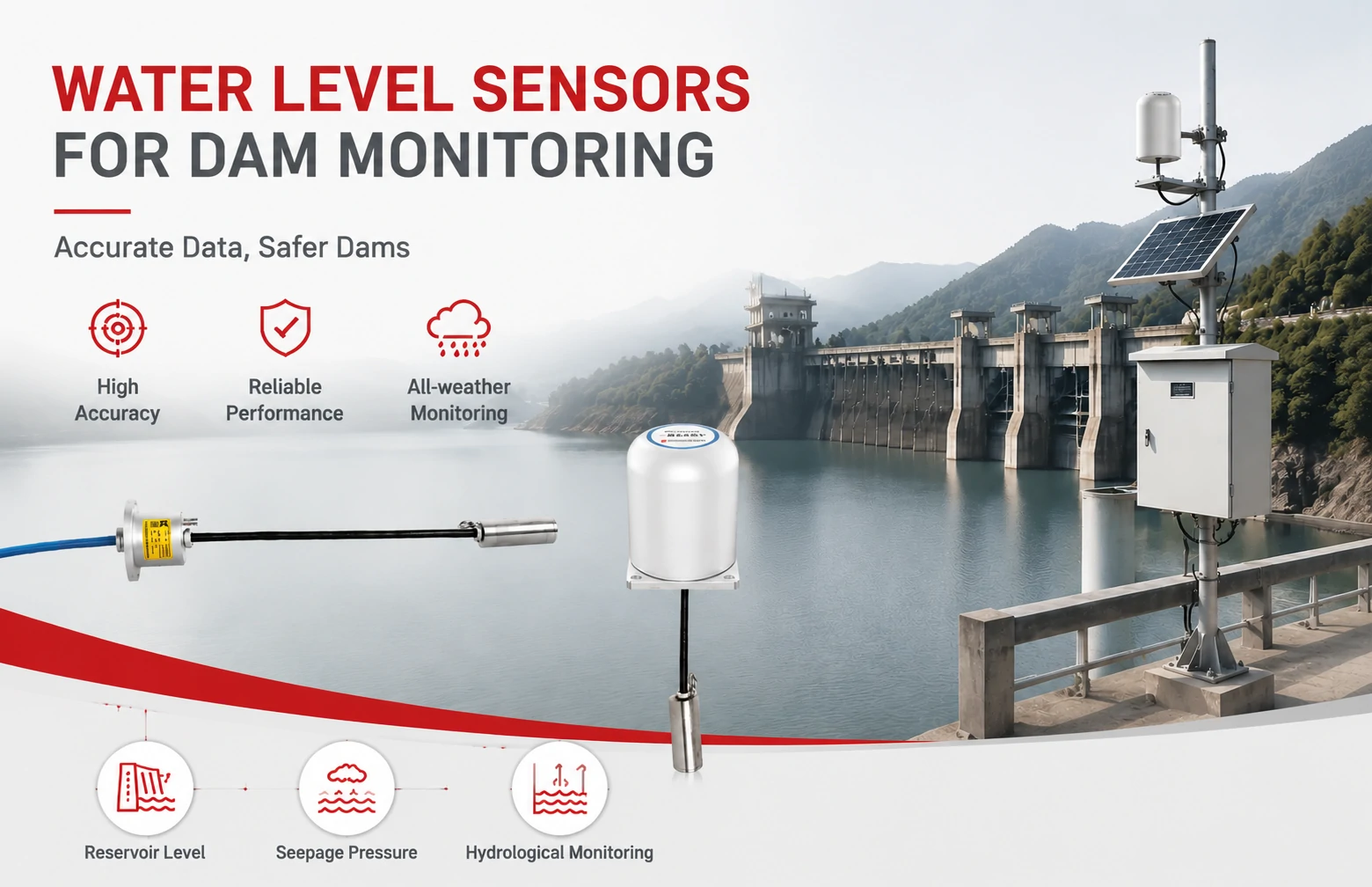
Kingmach Water Level Sensors for Dam Monitoring: A Buyer's Guide to Differential Pre...
Products
FAQ
4-20mA is an analog current with strong anti-noise ability, suitable for long distance and simple wiring situations, especially suitable for direct reading of existing PLC/DCS systems. RS485 is digital communication and can transmit more data (such as temperature, conductivity), but it requires communication protocol and address configuration, and the bus length is limited. The core of reliability is not the output type, but installation and protection. Kingmach's 4-20mA sensor is IP68 sealed. As long as the terminals are waterproof, there is no problem in long-term operation in the field. If the system has already adopted an analog acquisition module, it is easiest to use 4-20mA.
Common probe lengths range from 6cm to 15cm. Kingmach provides customized services and can lengthen the probe as needed to monitor deeper soil. When using, the probe needs to be fully inserted into the area to be measured to avoid leaving any gaps. For high-saline-alkali or clay soils, the sensor will have a universal calibration when leaving the factory, but on-site soil type-specific calibration can improve accuracy. This requires taking a representative soil sample, using the drying method to make several points, and then inputting it into a secondary instrument or PLC for remapping. Kingmach technical support can guide this process.
The common 4-20mA sensor is a two-wire system, that is, the power supply and the signal share two wires. The wiring is simple, but the analog module of the PLC needs to support loop power supply. If the PLC only provides voltage input, an external 24V power supply is needed in series. The four-wire system mainly separates power supply and signal, and is usually used in situations with its own power output. Kingmach provides a two-wire system by default, which can be adjusted if there are special requirements on site. The power supply voltage must be stable. For outdoor solar systems, pay attention to whether the voltage drops below the minimum working voltage of the sensor on rainy days.
Each 4-20mA sensor needs to occupy an analog input channel of the PLC because they are independent current sources. If there are not enough channels, a cost-effective approach is to poll with multiple strobes, but this introduces switching delays and additional points of failure. Another idea is that some nodes use RS485 bus sensors, so that multiple devices can be hung on one bus. Kingmach has sensors with two output modes, which can be flexibly combined according to channel resources.
The electronic part of the sensor itself is very stable and generally does not require frequent calibration. However, after long-term use, the surface of the probe may be scaled or corroded, affecting the readings. For a quick on-site inspection, you can use a multimeter to measure the loop current, and then compare the moisture content of several points with the drying method to see if the deviation is within the acceptable range. If the deviation is large, the probe may need to be cleaned or calibrated on site. Kingmach recommends that in important projects, undisturbed soil samples be taken every six months to one year for verification as preventive maintenance.
Share your product type, target capacity, and application requirements. Our team can review the details and recommend a practical next step.
Related Keywords
If you are interested in our products or want to become our partner.
Please leave your contact information, our team will contact you as soon as possible.
Mail: [email protected]
Contact Us: +8613808434127
Address: No. 188 Tongzipo West Rd, Changsha, Hunan, China